

Dear Readers,
Thank you to all the new readers who have signed up for Asia Communique!
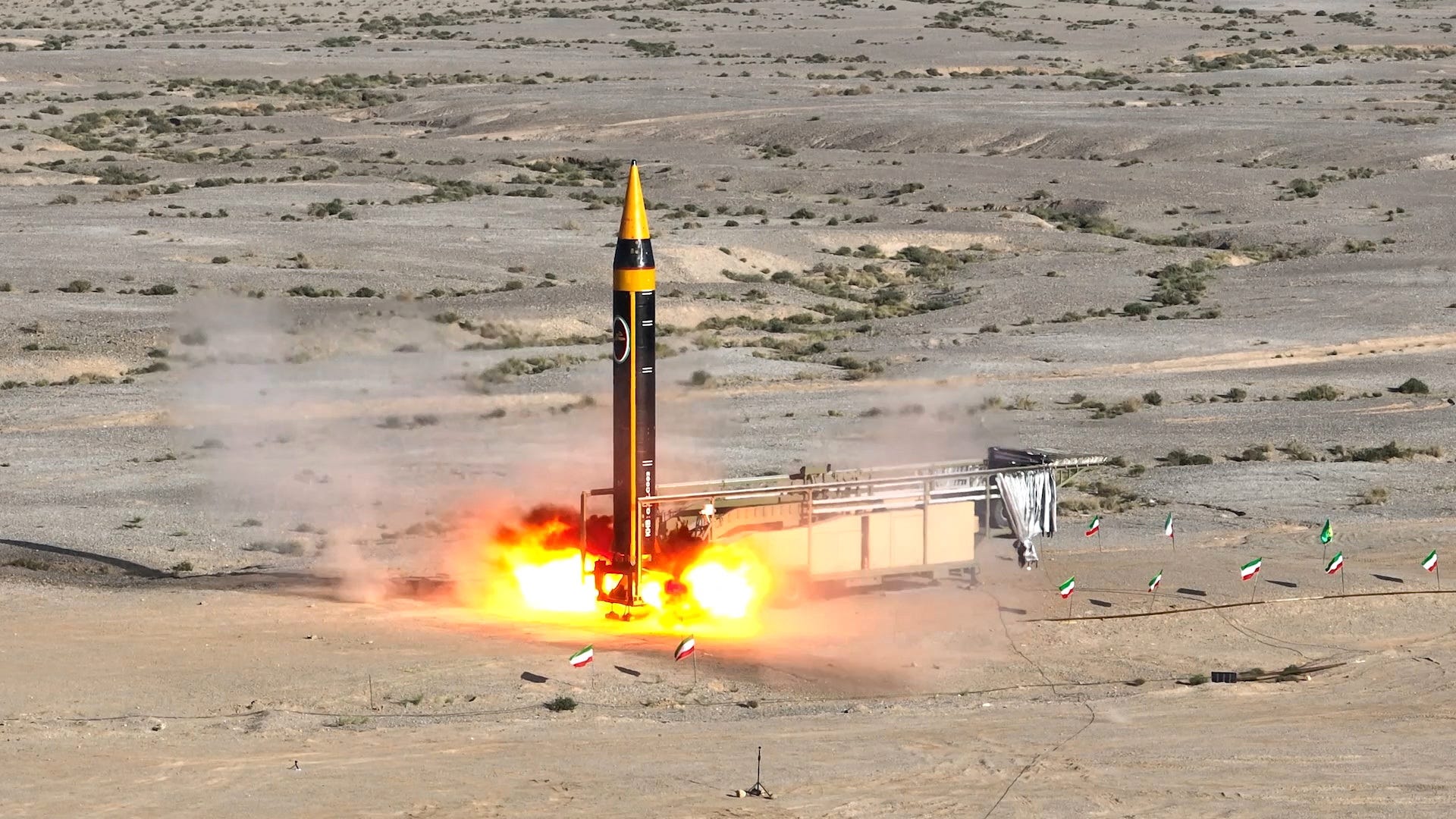
The 2026 Iran war is not a distant Middle Eastern crisis for Asia; it is a live stress test of the region’s energy security, alliance structures, and ongoing arms buildup.
Disruption in and around the Strait of Hormuz—through which roughly one‑fifth of global oil and a similar share of liquefied natural gas (LNG) normally transit—has already snarled shipments to key Asian buyers and driven up transport and crude costs.
At the same time, the conflict is forcing U.S. allies and partners in East Asia to reassess how much they can rely on U.S. military bandwidth when around 40% of U.S. naval assets are reportedly tied down in the Middle East and the only carrier in Asia is in maintenance.
This edition argues that the Iran war will accelerate three trends that were already reshaping Asia’s security landscape: a structural push to harden energy supply chains, a surge in regional defense spending and arms racing, and a more opportunistic China positioning itself as both an energy customer and alternative diplomatic pole.
Together, these trends tighten the feedback loop between West Asian crises and Indo‑Pacific deterrence, raising medium‑term escalation and miscalculation risks even if no Asian military is directly involved in the fighting.
Energy shock as Asia’s immediate vulnerability
Asia is the world’s largest oil‑consuming region and still deeply dependent on Middle Eastern suppliers for roughly 60% of its crude imports, leaving it acutely exposed when shipping in and out of the Gulf is disrupted.
The current conflict has seen tankers bottled up inside the Gulf and insurers hike war‑risk premiums, pushing up both crude prices and freight costs for refiners across the region.
For China and India—the first and third largest crude importers globally—the stakes are obvious.
China is the top buyer of Iranian oil, importing around 1 million barrels per day from Iran in 2025, accounting for roughly 13% of its seaborne imports; that flow is now jeopardized by the fighting and sanctions‑driven shipping and insurance complications.
India has leaned heavily on Gulf suppliers for crude and relies on the region for about 91% of its liquefied petroleum gas (LPG) imports, a dependence that New Delhi’s own analysts now flag as a strategic liability in wartime.
Governments across East Asia are discovering that strategic stockpiles buy time but not immunity.
Japan imported about 2.34 million barrels of crude per day in January 2026, roughly 95% of which came from the Middle East, and it remains one of the world’s top LNG importers; Tokyo has so far resisted tapping its large strategic reserves, but officials acknowledge that prolonged disruption at Hormuz would quickly tighten the market.
South Korea and Taiwan, which also source roughly half or more of their energy from the Middle East, have activated contingency plans and emphasized that current stockpiles cover only weeks to a few months of demand.
Southeast Asian states, though somewhat less import‑dependent on the Gulf, are hardly insulated.
Thailand, for example, has temporarily suspended petroleum exports to protect domestic reserves—officials say current stocks cover about 61 days—and is trying to boost gas production in the Gulf of Thailand, but analysts warn that its heavy reliance on spot‑market LNG leaves it highly exposed to price spikes and bidding wars with richer North Asian economies.
Across the region, finance ministries are already warning that another extended oil shock on top of post‑pandemic inflation could dent growth, widen fiscal deficits, and amplify domestic political pressure over the cost of living.
From price shock to strategy shift
The war’s most durable impact is likely to be strategic rather than cyclical.
Indian policy reviews now frame the conflict as a wake‑up call on three fronts: the absence of strategic LPG reserves, the danger of concentrating import sources in one region, and the vulnerability of shipping lanes that pass through chokepoints like Hormuz.
Short‑term fixes—such as emergency powers to boost domestic LPG output, demand rationing, and ad hoc alternative supply deals—are being coupled with calls for medium‑term naval protocols to protect energy shipping and for diversification of suppliers beyond the Gulf.
East Asian planners are drawing parallel lessons.
Energy‑intensive sectors like Taiwan’s semiconductor industry and South Korea’s petrochemicals and heavy manufacturing remain deeply exposed to fuel price volatility and physical disruption, making energy security a national‑security issue rather than a narrow economic concern.
Analysts across Japan, Korea, and Taiwan have argued that higher near‑term costs for accelerating renewables and nuclear restarts may be preferable to recurring vulnerability to distant conflicts, especially as fossil fuels still dominate their power mix—with renewables providing less than 10% of electricity in Korea and Taiwan and about 22% in Japan.
In Southeast Asia, the sense of urgency is more uneven but palpable.
Energy agencies within ASEAN have warned that a prolonged closure or congestion of Hormuz could “severely hinder global economic activity,” with ASEAN’s Centre for Energy stressing that current disruptions are not just a temporary shock but a preview of structural fragility in Asian energy security.
This reinforces, rather than replaces, the pre‑existing case for regional grid interconnection, diversification of fuel types, and investment in strategic reserves at the national and regional levels.
A parallel trend: record military spending
Even before the first missiles flew in the 2026 Iran conflict, Asian defense budgets were rising at their fastest pace in over a decade.
According to Stockholm International Peace Research Institute (SIPRI) data, global military spending hit a record 2.7 trillion U.S. dollars in 2024, with Asia–Oceania accounting for about 629 billion dollars, an increase of 6.3% from 2023 and the largest jump since 2009.
East Asia alone spent 433 billion dollars in 2024, up 7.8% year‑on‑year, reflecting what SIPRI describes as an unprecedented arms race driven largely by concerns over China.
China now accounts for roughly half of all military expenditure in Asia–Oceania.
Its 2024 defense budget is estimated at around 314 billion dollars, a 7% increase from 2023 and its largest annual rise since 2015, marking roughly three decades of uninterrupted growth aimed at modernizing all domains of the People’s Liberation Army by 2035.
Statista and other SIPRI‑based compilations suggest that Chinese military spending grew by more than 20% between 2020 and 2024, reaching approximately 320 billion dollars in constant 2023 prices.
Regional responses have been robust.
Japan has increased its defense spending by over 40% between 2020 and 2024, lifting its 2024 budget to roughly 55–58 billion dollars—about 1.4% of GDP and its highest level since the late 1950s—as it invests in long‑range strike capabilities and missile defenses against China and North Korea.
Taiwan has raised military spending by about 37% over the same five‑year period, sharpening its focus on asymmetric capabilities such as missiles, drones, and air‑defense systems.
India’s military expenditure has climbed by around 8% from 2020 to 2024 to reach roughly 84–86 billion dollars, keeping it among the world’s top five spenders even as it remains a major arms importer.
How the Iran war accelerates the arms race
The Iran war does not create these defense‑spending trends; it amplifies them and shifts their political justification.
Policymakers in Tokyo, Seoul, New Delhi, and Taipei can now point to a live demonstration of how quickly a distant crisis can tie down U.S. forces, jolt energy markets, and redefine risk calculations for middle powers.
In Japan, where the government has already framed its historic defense buildup as a response to a more hostile regional environment, the conflict is likely to strengthen arguments for further increases in spending and for loosening restrictions on arms exports and joint development.
South Korean strategists are particularly focused on alliance credibility rather than on the Iran theater itself.
Analysts in Seoul warn that Washington’s demonstrated willingness to use force with limited prior consultation, and to reassign significant military assets away from the Indo‑Pacific to the Middle East, raises the risk that Korea could be dragged into conflicts beyond the peninsula or left more exposed if a crisis with North Korea or China erupted while U.S. forces are overstretched.
That, in turn, feeds domestic debates over strengthening indigenous conventional and missile capabilities and, on the political fringes, over nuclear options, even if mainstream support for nuclearization remains low.
For India, the war intersects directly with its twin concerns about border threats and sea‑lane security.
New Delhi has long worried about the vulnerability of its energy imports to disruptions in West Asia; the present conflict validates arguments for faster naval modernization, greater maritime domain awareness in the Arabian Sea and Indian Ocean, and closer security coordination with partners such as France, the United States, and regional states like the UAE. As Indian defense spending edges upward and industrial policy pushes self‑reliance, the Iran war strengthens the case for investments in air and missile defense, anti‑submarine warfare, and escort capabilities for critical shipping, rather than just traditional land‑centric modernization.
U.S. bandwidth and allied anxiety
The war is also a real‑time test of Washington’s long‑stated “pivot” to the Indo‑Pacific.
Recent reporting suggests that about 40% of U.S. Navy ships are currently deployed to or supporting operations in the Middle East, and that the only U.S. aircraft carrier assigned to Asia is in maintenance, raising pointed questions in Tokyo, Seoul, and Taipei about how quickly credible U.S. naval power could surge in an East Asian contingency while a major operation against Iran is still underway.
This apparent re‑prioritization contrasts with recent U.S. strategy documents that cast the Indo‑Pacific—and specifically the Taiwan Strait—as the central theater of strategic competition.
U.S. allies’ reactions are cautious but revealing.
Japanese leaders have expressed strong support for diplomatic efforts to halt Iran’s nuclear ambitions and de‑escalate the conflict but have conspicuously stopped short of endorsing the initial U.S.–Israeli strikes that triggered the broader war; legal and political constraints continue to limit any prospect of direct Japanese military involvement.
South Korea openly worries that the Trump administration’s willingness to act unilaterally, coupled with the possibility of being drawn into secondary theaters, complicates its own deterrence and crisis planning on the peninsula.
In Taiwan, lawmakers and analysts warn that prolonged U.S. distraction in the Middle East could embolden Beijing to step up military and grey‑zone pressure around the island, calculating that U.S. naval and air reinforcements would face competing demands and longer deployment timelines.
While no government in East Asia is publicly decoupling from the U.S. alliance network, the Iran war underscores the logic of what many have already been doing quietly: hedging by deepening intra‑Asian security ties, building more self‑reliant capabilities, and exploring limited security cooperation with European partners.
China’s balancing act and opportunity space
Beijing’s stake in the conflict is multidimensional.
China is a major energy customer for Iran and other Gulf producers, and it has portrayed itself for years as a neutral broker capable of mediating between Iran and Saudi Arabia, in contrast to what it depicts as U.S. militarization of the region.
At the same time, Chinese strategists are acutely aware that their core security interests lie in East Asia, not the Middle East, and that over‑commitment westward could undercut their ability to manage U.S. and allied pressure closer to home.
The war nonetheless offers Beijing both risks and openings.
On the risk side, sustained disruption of Iranian and Gulf energy exports directly affects an economy that remains heavily import‑dependent for hydrocarbons despite rapid growth in renewables.
On the opportunity side, any perceived U.S. overextension or wavering commitment to Indo‑Pacific priorities allows China to frame itself to regional audiences as the steadier, geographically proximate power—particularly if it can maintain trade and investment flows while Washington is preoccupied. Chinese commentators also see the conflict as a live rehearsal of how economic warfare, sanctions, and maritime chokepoints might be used against China itself in a Taiwan or South China Sea crisis.
This reinforces Beijing’s ongoing efforts to diversify overland and maritime energy routes via projects linked to the Belt and Road Initiative, including pipelines and port access that reduce reliance on sea lanes passing through Hormuz and Malacca.
In that sense, the Iran war is both a near‑term disruption and a data point feeding into longer‑term Chinese efforts to de‑risk its own external dependencies.
Strategic implications for Asian decision‑makers
Taken together, the Iran war and Asia’s existing security trends point toward a more militarized and less predictable Indo‑Pacific.
Energy supply chains are now plainly understood as a frontline vulnerability rather than a background economic variable, and governments are moving—unevenly but perceptibly—toward diversification of suppliers, expansion of strategic reserves, and tighter linkage between energy and naval strategy.
At the same time, the region’s defense‑spending trajectory shows no sign of leveling off; if anything, the conflict validates domestic arguments for larger budgets and more sophisticated capabilities across U.S. allies, partners, and competitors alike.
The war also complicates alliance management.
For U.S. allies, the lesson is not that Washington is abandoning Asia, but that its attention and assets are finite and can be pulled into simultaneous crises—sharpening incentives to invest in self‑defense, deepen minilateral cooperation, and, in some cases, keep lines of communication open with Beijing even as deterrence is strengthened.
For China, the conflict underscores both the leverage and vulnerability that come with being a top energy importer and a rising military power, pushing it to intensify diversification and hardening strategies.
Over the coming months, key signposts to watch will include: whether energy prices and shipping disruptions remain elevated or normalize; whether Japan and South Korea lock in additional multi‑year increases in defense spending beyond what is already planned; how India sequences its naval and air‑defense investments relative to land forces; and whether U.S. force posture in the Indo‑Pacific returns quickly to pre‑war baselines or remains strained by extended operations against Iran.
Those choices will determine whether the Iran war becomes remembered in Asia as a brief external shock—or as the moment when energy insecurity and great‑power distraction decisively accelerated the region’s slide into a more dangerous security environment.