

Hello all,
We’ve had a fantastic response to the upcoming China OSINT course! If you have already enrolled in Tier 1 or Tier 2, check your inbox—I just sent out the official syllabus. Full course access will go live during the first week of June.
I designed this program specifically for busy professionals who need an efficient way to level up their intelligence-gathering capabilities. As major consulting firms have recently highlighted, pairing advanced OSINT skills with AI will be one of the most powerful ways to future-proof and transform your career over the next decade.
The Week Xi Jinping Hosted the World — and Won
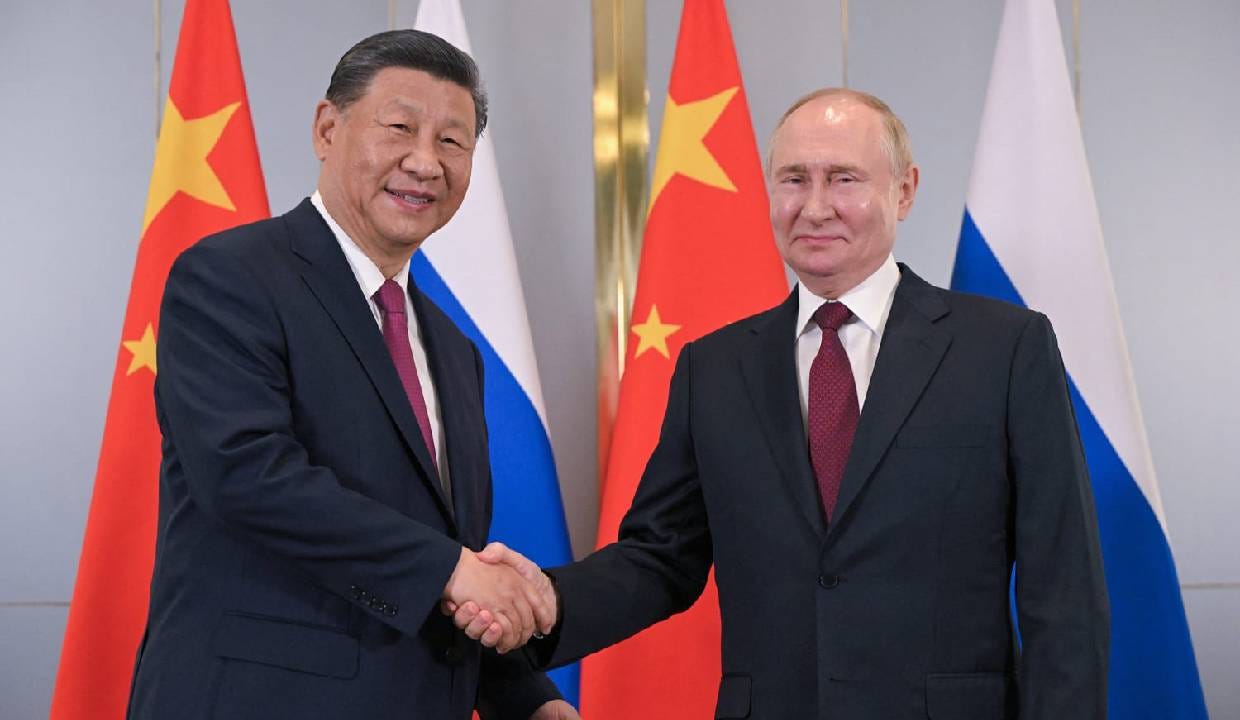
I’ve spent time in rooms where power is performed rather than exercised. This week in Beijing, Xi Jinping did both.
In the span of seventy-two hours, the Chinese president received Donald Trump and then Vladimir Putin, the man whose invasion of Ukraine made China Russia’s indispensable economic partner. The backdrop was the US-Iran war, which has sharpened the strategic importance of every energy and trade conversation now taking place in Asia.
Putin arrived in Beijing for his 25th official visit to China and was greeted with a formal welcoming ceremony outside the Great Hall of the People. He brought a large delegation, including five deputy prime ministers, eight ministers, and several business executives. The agenda covered bilateral relations, trade, energy cooperation, the Ukraine conflict, and the war between the US and Iran. The two leaders are also expected to sign a joint statement, while Putin later meets Premier Li Qiang to discuss trade and economic cooperation.
The relationship is not just diplomatic theatre. Bilateral trade between Russia and China topped $240 billion in 2023, more than doubling pre-Ukraine war levels, and China now takes roughly half of Russia’s crude oil exports.
One other detail matters here. FT reported that Xi privately told Trump that Putin might regret invading Ukraine, but both China and the US denied that account. That denial matters less than the fact that the story was even plausible enough to shape the diplomatic conversation around this visit.
What Xi and Putin Are Really Discussing in Beijing
Putin’s meeting with Xi in Beijing is being sold as routine diplomacy, but the agenda is doing the real talking. The two leaders are expected to cover bilateral relations, trade, energy cooperation, the US-Iran war, and Ukraine, which is a fairly precise way of saying they will discuss the pressure points now shaping the Eurasian order.
Energy sits at the centre of it. Russia wants to lock in longer-term demand from China, especially as the Middle East war keeps markets nervous, while Beijing wants a reliable supply at terms that still work in its favor. Trade is the other anchor, with Moscow leaning harder on China than at any point since the Ukraine war began.
Putin and Xi will discuss the Power of Siberia 2 pipeline, which has kind of stalled due to negotiations over the gas price.
Ukraine will be there too, even if Beijing avoids any public pressure on Moscow. And behind the formal language, this visit is still about the same thing it has always been about: proving that neither side needs to say too much in public because both already understand the value of the relationship.
Lai Ching-te to Trump and Xi: Taiwan’s Future Is Not Yours to Decide
The timing was not accidental. On the second anniversary of his inauguration, with Vladimir Putin sitting across from Xi Jinping just across the strait in Beijing, Taiwan’s President Lai Ching-te took to the podium in Taipei today to deliver a message aimed squarely at both capitals — and Washington.
“Taiwan’s future cannot be decided by external forces,” he said, “nor can it be held hostage by fear, division, or short-term interests. Taiwan’s future must be decided jointly by its 23 million people.” It was careful language, but the audience understood it perfectly. This was a direct response to Trump, who last week warned Taiwan against declaring independence after his Beijing summit with Xi, and who has been sitting on a $14 billion arms sale to Taipei, describing it openly as a negotiating chip with China.
Lai’s position has been consistent since he took office. He argues that Taiwan is already a sovereign, independent democratic nation and that the Republic of China and the People’s Republic of China are not subordinate to each other, meaning there is no “Taiwan independence issue” to resolve because independence already exists as a fact. Beijing, which labels him a “troublemaker” and a “destroyer of cross-strait peace,” sees it differently. China has not ruled out using force to bring Taiwan under its control and has steadily increased military pressure around the island since Lai came to power.
What makes this week different is the context. Lai is no longer just managing Beijing’s pressure. He is now managing Washington’s ambiguity too. Trump’s comments after the Xi summit introduced a new variable: an American president willing to use Taiwan’s security as a lever in a broader negotiation, at the exact moment China is reinforcing its position with Russia and watching the US consume military and political capital in Iran. Lai’s speech today was a reminder that Taipei has read the room, and is not planning to quietly accept whatever arrangement Washington and Beijing work out between themselves.
Democracy, Lai said, is not “a gift that fell from the sky.” For anyone paying attention to what is happening in Beijing this week, that line carried more weight than it might ordinarily.
Meanwhile, here are some other stories from the region.
Malaysia seeks compensation over scrapped Norwegian missile deal
Malaysia says it is seeking more than US$250 million in compensation from a Norwegian firm after the cancellation of a missile deal, an unusually sharp escalation in a procurement dispute that could ripple into defence ties and future contracting confidence. The case adds another layer to Southeast Asia’s broader push to diversify suppliers while managing cost, credibility, and geopolitical exposure.
Thailand tightens visa-free entry amid crime concerns
Thailand is cutting visa-free stays for more than 90 nationalities, citing concerns over foreign-related crime and abuse of the policy, a move that could affect tourism flows and regional travel patterns. The policy shift also shows how governments are increasingly using border rules as a domestic security signal, not just a tourism tool.
I rarely recommend work by other authors in Substack, but this revelation by Netaskari gives us a rare look into China’s surveillance of foreigners. I highly recommend following the Substack.

Thank you!