

Hello readers — it’s been another breathless 48 hours in Asia. Trade diplomats were busy signing and negotiating deals, politicians faced courtrooms and protests, and security officials struggled to prevent border clashes from spiralling. Below is a tour of the region’s most consequential stories.
Clashes on the Thailand-Cambodia frontier
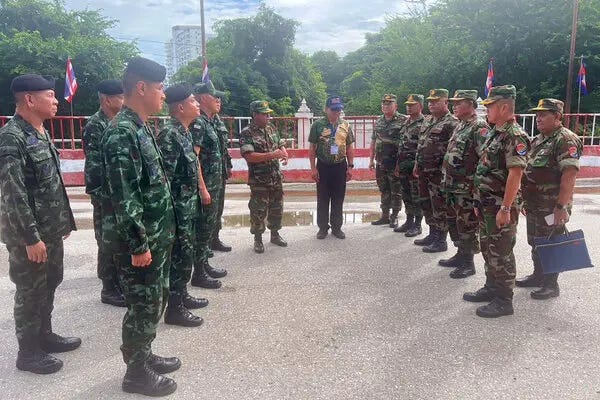
The simmering border conflict between Thailand and Cambodia again erupted despite diplomatic pressure. After more than two weeks of tit‑for‑tat shelling and accusations of chemical weapons use, Malaysia — as ASEAN chair — urged both sides to use this week’s emergency foreign‑minister summit in Kuala Lumpur to work out a ceasefire and “dialogue … based on mutual respect.” The Thai and Cambodian defense ministers agreed to meet on 24 Dec. at the border to discuss a truce; Thai Foreign Minister Sihasak Phuangketkeow said the goal was a “true” ceasefire with commitments and implementation plans. In Phnom Penh, officials accused Thailand of deploying F‑16 jets and “toxic gas”, while Bangkok said its actions were defensive. The crisis will test ASEAN’s ability to enforce peace among its members.
Taipei shaken by rare mass-casualty knife attack
Taipei was jolted late last week by one of the deadliest acts of violence the island has seen in years. A 27-year-old man carried out a knife and smoke-grenade attack around Taipei Main Station and nearby shopping districts, killing at least four people and injuring several others before dying during a police chase. Authorities say the suspect had a prior criminal record and had previously served as a military volunteer, though the motive remains unclear.
The attack has struck a nerve in a society where violent crime is rare and public transport is generally seen as safe. President Lai Ching-te ordered heightened security nationwide, while police presence was visibly increased at major transit hubs. Beyond the immediate security response, the incident has sparked a wider debate in Taiwan about mental health screening, access to replica military equipment sold online, and how authorities should balance openness with public safety — an uncomfortable conversation for a democracy that prides itself on both.
Rule of law under scrutiny
Malaysia: Former prime minister Najib Razak’s attempt to serve his corruption sentence under house arrest was rejected by a Kuala Lumpur court. The judge ruled that although an “addendum order” existed, the monarch’s instruction was not valid because it hadn’t been vetted by the pardons board. Najib, jailed since 2022 for graft, will appeal; the court’s decision comes just days before he faces verdicts in his largest 1MDB trial. The verdict has reignited tensions within Prime Minister Anwar Ibrahim’s coalition, where Najib’s party UMNO remains influential.
Pakistan: A special court sentenced former prime minister Imran Khan and his wife Bushra Bibi to 17 years in prison for illegally purchasing and selling state gifts, including watches given by Saudi Crown Prince Mohammed bin Salman. The pair, already serving sentences for separate corruption cases, were convicted of betraying public trust and money‑laundering. Khan’s party called the verdict politically motivated and plans to appeal.
Bangladesh: Tens of thousands attended a state funeral in Dhaka for Sharif Osman Hadi, a 32‑year‑old youth leader who was shot in the head while launching his parliamentary campaign. Hadi, a key figure in the student‑led uprising that toppled Sheikh Hasina last year, died in Singapore after six days on life support. Interim leader Muhammad Yunus promised to uphold his ideals and called for calm. Rights groups warned that the murder and subsequent mob attacks on newspapers and cultural institutions could undermine Bangladesh’s fragile transition ahead of February’s general election.
Diplomatic dance: balancing allies and rivals
South Korea: Seoul has restored its North Korea Strategy Division — now renamed the North Korea Policy Division — to emphasize dialogue and confidence‑building with Pyongyang. The defense ministry will also resurrect a deputy minister’s position to oversee artificial‑intelligence projects in the military. Separately, South Korea quietly sent a senior diplomat to Moscow to discuss North Korea’s nuclear programme with Russia’s envoy; Seoul urged Russia to help curb Pyongyang’s weapons and raised concerns about Moscow–Pyongyang military cooperation. On the domestic front, newly elected President Lee Jae Myung is moving the presidential office back to the historic Blue House compound, reversing his predecessor’s relocation to the defense ministry complex. The move is slated for completion by Christmas.
Japan and China: U.S. Secretary of State Marco Rubio (under President Donald Trump) visited Tokyo and emphasized that Washington could maintain its “strong partnership with Japan” while finding ways to work with China on global challenges. The message was intended to reassure allies and ease Chinese fears that the United States is assembling a containment bloc. Beijing, meanwhile, protested after a senior Japanese ruling‑party official visited Taiwan. China’s foreign ministry insisted that Tokyo should “reflect on its mistake”, while Taiwan’s President Lai Ching‑te urged deeper cooperation with Japan and called for democracies to stand together.
Iraq–Pakistan: President Asif Ali Zardari paid his first visit to Baghdad in decades, meeting Iraqi President Abdul Latif Rashid. Both leaders committed to expanding trade, investment, agriculture, defense production and IT cooperation. Zardari pitched direct banking links and easier visas to facilitate pilgrimages for Pakistani Shiites and pledged joint efforts against extremism and narco‑trafficking.
Trade winds and economic shifts
New FTAs: New Zealand and India concluded a landmark free‑trade agreement eliminating or reducing tariffs on 95 % of New Zealand’s exports to India; in return, Indian goods will receive duty‑free access to New Zealand. Wellington also pledged to invest US$20 billion in India. The deal excludes Indian dairy to protect farmers but could double bilateral trade when signed in early 2026. Critics in New Zealand’s coalition government worry it gives too much away, while business leaders hail the opportunity.
Indonesia’s flurry of deals: Jakarta signed a free‑trade agreement with the Russian‑led Eurasian Economic Union (EAEU), gaining preferential tariffs on 90.5 % of goods traded with the bloc and access to a 180‑million‑person market. The deal is expected to boost exports of palm oil, footwear, textiles and electronics. Separately, Indonesia’s coordinating economy minister Airlangga Hartarto flew to the United States to finalize a reciprocal trade agreement aimed at lowering tariffs on Indonesian products; officials hope to conclude the negotiations within weeks.
Tit‑for‑tat tariffs: China responded to the EU’s investigation of Chinese electric vehicles by imposing provisional 21.9 %–42.7 % duties on European dairy products like French Roquefort cheese. Beijing’s commerce ministry said EU subsidies were hurting Chinese dairy farmers and added that the tariffs could be revised later. Analysts saw the move as retaliation in an escalating trade dispute.
Corporate diplomacy: Apple’s chief operating officer Sabih Khan met China’s vice‑commerce minister Li Chenggang in Beijing. Li promised that China would offer “greater opportunities” to foreign firms and urged Apple to deepen partnerships with Chinese suppliers.
Climate litigation: In a rare trans‑national climate case, a court in Zug, Switzerland agreed to hear a complaint brought by residents of Pulau Pari, a low‑lying Indonesian island frequently flooded by rising seas. The islanders argue that Swiss cement giant Holcim is failing to cut carbon emissions and seek compensation for climate‑change damage. The case could set a precedent for holding companies accountable for emissions impacting vulnerable communities.
Japan’s nuclear comeback: Niigata prefecture’s assembly voted to restart the Kashiwazaki‑Kariwa nuclear plant, the world’s largest, which has been idle since the 2011 Fukushima disaster. The vote effectively clears the way for Tokyo Electric Power Company (TEPCO) to bring one reactor online next year and another around 2030. Governor Hideyo Hanazumi called the restart a milestone but noted there is “no end” to ensuring safety. The move forms part of Prime Minister Sanae Takaichi’s plan to double nuclear’s share of Japan’s energy mix by 2040, though local protests underscore lingering trauma from Fukushima.
In brief
Vietnam’s leadership race: Vietnam’s Communist Party will convene its quinquennial congress from January 19–25. Around 1,600 delegates will select a roughly 200‑member Central Committee, which then elects the Politburo and general secretary. Current party chief To Lam, who took power after Nguyen Phu Trong’s death, is seeking a second term after expanding police powers during his brief tenure. Vietnam aims for annual GDP growth of at least 10 % in 2026–30 and wants to reduce reliance on foreign investment while fostering “national champion” firms.
South China Sea dairy: Beijing’s state‑owned CNOOC reportedly began production at a new offshore oil project in the South China Sea (details are scarce due to paywall restrictions), underscoring China’s push for energy self‑sufficiency and strategic control over contested waters.
Taiwan security: After a deadly mass stabbing in Taipei on Dec 19 that killed at least four and injured several others, President Lai Ching‑te vowed a tough response and ordered heightened security. The attacker, a 27‑year‑old former air force volunteer, used smoke grenades and knives in crowded metro stations; he died after falling during a police chase. Violent crime is rare in Taiwan, and the incident shocked the island.