

Hello Readers,
Over the past week, we saw the purging of Chinese military officials Zhang Youxia and Liu Zhenli — a dramatic development. There is ample speculation among China watchers about what’s behind the downfall and its implications. I will spare you from that speculation for now, while giving you a deep dive into how Chinese state media and public narrative framed the purge.
Military Earthquake in Beijing: What China’s State Media Reveals—And Hides—About the Zhang Youxia Purge
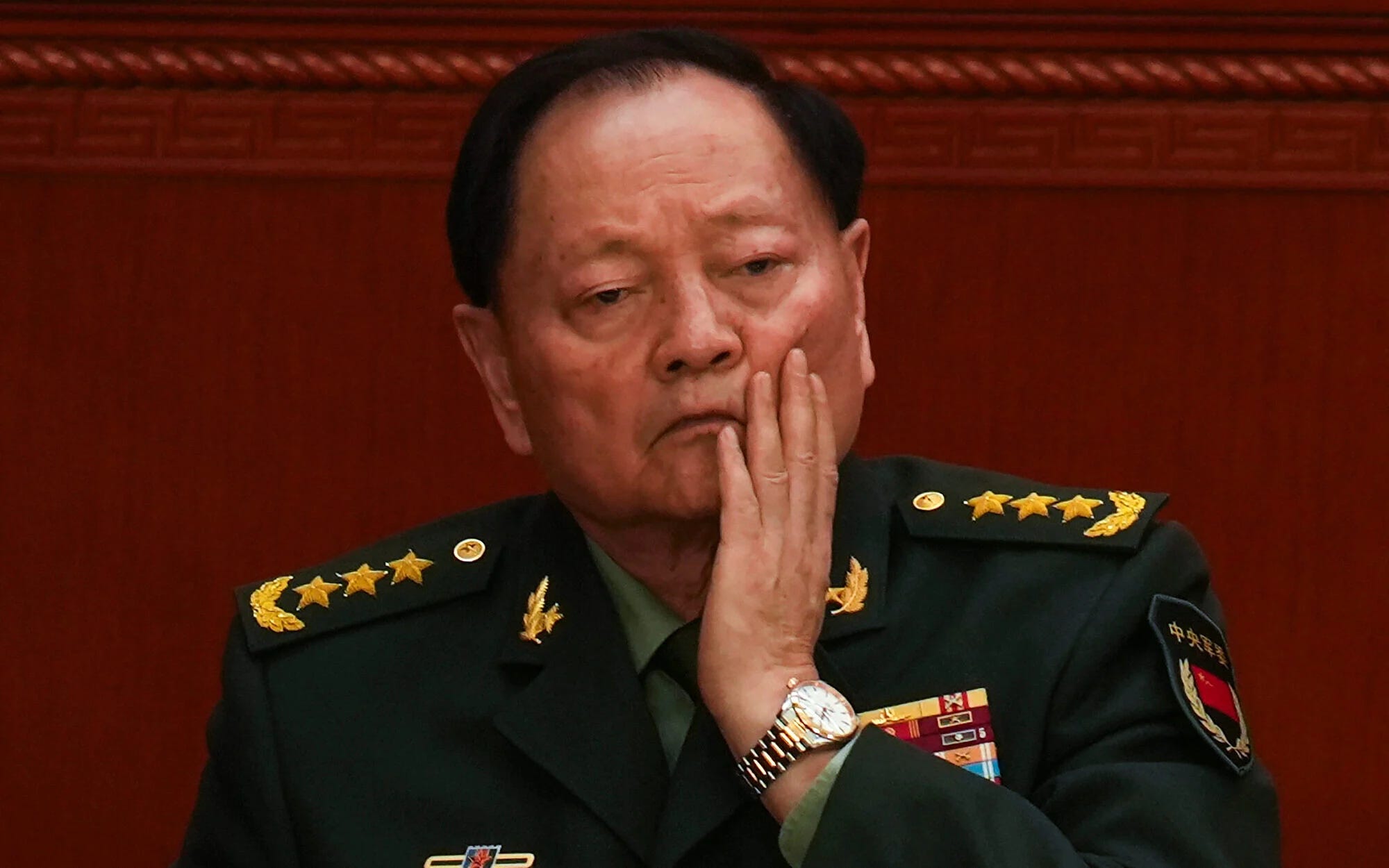
On January 24, China’s Ministry of Defense issued a terse 30-second statement that sent shockwaves through Beijing’s elite circles. Zhang Youxia, the 75-year-old vice chairman of the Central Military Commission and China’s highest-ranking general after Xi Jinping, was under investigation. So was Liu Zhenli, the 61-year-old chief of the PLA’s Joint Staff Department. Both were accused of “serious violations of discipline and law”—Party-speak for corruption—and that was essentially all the public would hear directly.
But what China’s state media did say in the hours and days that followed tells a more revealing story than what it didn’t. And that’s where things get interesting.
The Official Choreography
The rhythm of Beijing’s propaganda machine is as predictable as it is controlled. Announcement Saturday morning. Editorial from the People’s Liberation Army Daily on Sunday. Message discipline was enforced across state outlets. No press conferences. No details. No follow-up—at least not at first.
Xinhua, China’s official news agency, framed the investigation as “China resolute in winning anti-corruption war in military,” recycling the familiar narrative that Xi Jinping’s decade-long anti-corruption campaign has finally reached even the most senior ranks. The headline was clinical, almost bureaucratic. But the editorial that followed from the PLA Daily—the military’s official newspaper—was anything but.
This is where you see the actual signal buried beneath the carefully constructed surface messaging.
Reading Between the Lines: The PLA Daily Editorial
On January 25, the PLA Daily published what analysts are calling the harshest condemnation of a fallen military figure since Xi came to power. The language wasn’t just severe—it was different. And that difference matters.
Zhang and Liu hadn’t merely “undermined” the CMC chairman’s authority, as previous fallen generals were accused of doing. They had “seriously trampled on and undermined“ it. The shift from “undermining” to “trampling on” is, according to Singapore-based analyst Yang Zi, evidence of something more than standard corruption: “You can feel the bitterness in the paragraph.”
The military newspaper went further. Zhang and Liu, it said, had:
“Gravely betrayed the trust placed in them” by the Party
“Severely fueled political and corruption problems that threaten the Party’s absolute leadership over the armed forces”
Damaged “the political and ideological foundation of unity and progress among all military personnel”
Inflicted “grave harm on efforts to strengthen political loyalty in the military”
The editorial wasn’t primarily about embezzled money or sweetheart military contracts, though those may well be factors. It was about loyalty, authority, and control. It was about what happens when even the untouchable become touchable.
Besides, the speculation about Zhang Youxia leaking nuclear secrets, as reported by WSJ, doesn’t hold water. That’s most likely Beijing trying to set the narrative.
I will be waiting for more leaks to follow.
The Real Message: “No One Is Safe”
Here’s what state media was trying to communicate to Beijing’s elite: the anti-corruption campaign has no off-limits zones. Not rank. Not longevity. Not even decades-long personal relationships with Xi Jinping himself.
Zhang and Xi’s fathers had fought side-by-side during the Chinese Communist Party’s early years in the 1930s, before the founding of the People’s Republic. Xi made a special exception to let Zhang serve past the mandatory retirement age. Zhang was the kind of insider you don’t touch. Yet he was touched. Immediately. Without warning.
The state media narrative emphasized Xi’s determination: “no matter who they are or what position they hold, anyone involved in corruption will be dealt with without leniency.” The message was consistent across Xinhua, China Daily, and the PLA Daily. But state media carefully avoided saying whether this was about corruption, loyalty, competence, or something else entirely.
What’s Not Being Said: The Censorship Story
This is where the real indicator of concern emerges. Inside China, the Zhang Youxia story has been largely suppressed. Users on Weibo, China’s Twitter-like platform, report finding little to no coverage when searching for information about the investigation. One Reddit user documented their Chinese wife finding nothing when she searched—despite Zhang’s position as China’s most senior uniformed officer.
Compare that to the West, where international media outlets have been flooded with reporting, including leaked allegations that Zhang shared nuclear weapons secrets with the United States and accepted bribes for promotions. The Wall Street Journal reported that military officers were briefed on allegations that Zhang “formed political cliques” and accepted “huge sums of money in exchange for official promotions.”
The fact that Beijing felt compelled to suppress domestic discussion while international accounts spread unchecked suggests genuine nervousness about how this plays internally. The leadership isn’t comfortable with this narrative spreading widely among the Chinese public or PLA rank-and-file. State media can control the tone of official messaging, but it can’t fully control what people think when they notice that China’s top general has vanished from public life.
Why the Harshness? Three Theories
The PLA Daily’s particularly bitter language has analysts offering three competing interpretations, none of which state media will confirm or deny:
Theory One: Corruption, But Systematic. Zhang oversaw military procurement for years—an area notorious for graft in the PLA. The Party may genuinely view his tenure as having allowed widespread corruption that undermined military modernization ahead of the 2027 centenary of the PLA and the ambitious 2049 “China Dream” deadline for military dominance.
Theory Two: Disloyalty. Some analysts suspect Zhang may have subtly resisted Xi on key policy decisions, particularly regarding Taiwan. A 2024 editorial Zhang authored noted that the military faced challenges in executing “complex joint operations”—which some U.S. analysts interpreted as coded criticism of readiness. Removing Zhang, in this view, eliminates the last credible voice of caution in Xi’s inner circle.
Theory Three: Paranoia and Control. Xi has now purged five of the six generals he personally promoted to the Central Military Commission in 2022. He sits atop a military leadership consisting of himself and one other general, Zhang Shengmin, who has built his career as a discipline inspector—essentially, Xi’s enforcer. The message state media can’t openly send but seems desperate to communicate is: Xi’s authority is absolute and unchallengeable.
What This Means for Taiwan
This is the question dominating discussions in Washington, Tokyo, and Taipei. Does removing Zhang Youxia and Liu Zhenli—both experienced commanders—make military action against Taiwan more likely or less likely?
State media carefully avoids this question. But the international consensus leans toward the former concern: with moderating voices purged, Xi now has fewer institutional checks on adventurism. One analyst put it bluntly: “With his purge and that of his associates, there is far less resistance in the system.”
Taiwan’s defense ministry is “monitoring abnormal leadership changes,” and officials have stated they’re watching for shifts in Beijing’s intentions. But as one expert noted, this purge “raises broader questions about political stability in a rising nuclear superpower” and could, perversely, make Xi more hesitant to risk military action while consolidating internal control. Lately, Taiwan hasn’t been able to give any deep insights into the internal developments in Beijing — so I wouldn’t be holding my breath.
The Domestic Signal
What state media is saying—loudly and repeatedly—is that 2026 is a critical year. The PLA Daily editorial emphasized that this is “the launch of the 15th Five-Year Plan and a critical year in the arduous journey towards achieving the centenary goals of the PLA.” The implication: the military needs complete unity and loyalty to achieve Xi’s ambitions.
For the PLA officer corps reading between the lines of that editorial, the message is chilling: dissent is disloyalty, and disloyalty ends careers—or worse. Careerists will learn to keep their professional opinions to themselves. Risk-takers will be cautious. Initiative will be suppressed in favor of loyalty displays.
From state media’s perspective, this is the anti-corruption campaign working as intended. From an institutional perspective, it’s potentially catastrophic for the PLA’s operational capacity and decision-making process.
The Pattern
Zhang’s fall is part of a larger purge. Since 2024, six senior military officials have either been expelled from the Party or are under investigation. The official count of military officials punished since Xi came to power in 2012 exceeds two dozen, with particularly harsh treatment in recent years. The PLA Daily claims this demonstrates Xi’s “zero tolerance” for corruption. The institutional reality suggests it demonstrates Xi’s zero tolerance for anyone who might say no.
State media can’t admit that, so it falls back on the familiar language of Party discipline, anti-corruption, and the “absolute leadership of the Party over the military.” These aren’t lies, exactly. But they’re not the whole story either.
What We’re Watching
The key indicators to follow in coming weeks:
Domestic Coverage: Will state media eventually run longer pieces explaining the investigation, or will it remain frozen at the terse announcement stage?
Military Appointments: Who gets promoted to fill the CMC vacancies created by these removals? Younger, more ideologically aligned officers, or seasoned commanders willing to challenge Xi?
Taiwan Posture: Does the PLA shift toward more aggressive posturing now that moderating voices are sidelined, or does Xi focus inward on consolidation?
International Messaging: Will Beijing attempt to spin this narrative abroad, or will it remain largely a domestic suppression operation?
A more assertive military action, perhaps in the South China Sea, to showcase stability in the PLA.
State media will continue to frame this as a triumph of Xi’s anti-corruption campaign. Analysts will continue to debate whether it’s corruption, disloyalty, or Xi’s deepening paranoia about control. The truth, as is often the case in Beijing, is probably some combination of all three—and state media’s careful silence on the specifics is the most honest thing it’s said.
Thank you for reading and if you like the edition, please share!