

Afghanistan has chewed up a lot of great powers. Now it’s starting to chew up China’s plans as well.
This week, Intelligence Online reported that China’s Ministry of State Security (MSS) has ordered the “immediate withdrawal” of Chinese teams and interests from Afghanistan. Officially, Beijing is saying very little. Unofficially, its consular feeds on WeChat — and the way those alerts are blasted across Chinese news sites and onto Weibo — are doing the talking.
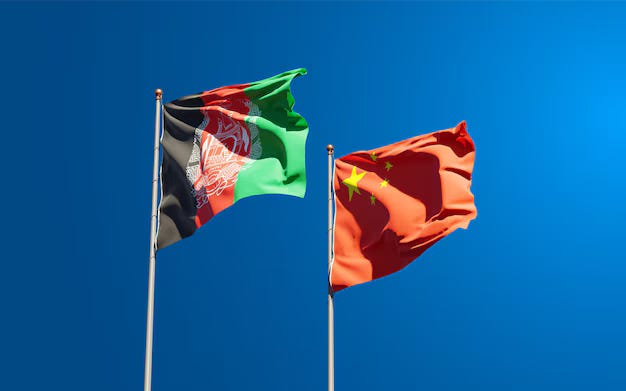
Put simply: if you’re Chinese and still in Afghanistan, the state is telling you to get out.
The secret order, and the public hints
According to Intelligence Online, the MSS has decided to pull back from Afghanistan for the long haul, not just ride out a bad few weeks. The key point in their piece is what this is not about: it’s not mainly a reaction to one or two incidents on the Tajik border. It’s about something deeper — a loss of confidence in Pakistan’s ability to protect Chinese interests across the whole Afghanistan–Pakistan–Central Asia arc.
For Beijing, that’s a big deal. For years the assumption was: Pakistan manages the Taliban problem, China brings the money and the engineers. If that stops working, the logic of keeping MSS teams and Chinese companies on the ground in Afghanistan starts to crumble.
Beijing isn’t going to hold a press conference to say “our bet failed.” Instead, we see the shift in the channels ordinary Chinese actually follow: consular WeChat accounts, embassy notices, and the big aggregators that repost them.
What WeChat is telling people
The clearest signal came on 23 January.
That day, the foreign ministry’s consular WeChat account “领事直通车” pushed out an alert saying Afghanistan’s security situation is “复杂严峻” — complex and severe — after a bombing in Kabul killed and injured Chinese nationals at a Chinese restaurant. The advice was unusually blunt: don’t travel to Afghanistan, and if you’re already there, “尽快撤离” — leave as soon as possible.finance.
Big portals like The Paper, Sina and Eastmoney all ran the text in full, with headlines along the lines of “中国公民尽快撤离!” (“Chinese citizens should leave as soon as possible!”), and flagged “领事直通车” as the source. Their Weibo accounts then pushed that same content into people’s feeds.
For a Chinese businessperson or worker in Kabul, you don’t need secret MSS cables to know what this means. When the official consular account tells you, in big red characters, to leave, that’s the closest thing you’ll get to an evacuation order.
Before that: “get out of the borderlands”
If you scroll back a bit, you can see how the message escalated.
On 7 January, the Chinese embassy in Kabul put out a notice focusing on the Afghan–Tajik border region. The language was already strong: it “again urged” Chinese companies and citizens in those areas to “promptly and in an orderly manner withdraw,” citing repeated cross‑border attacks in late 2025 that killed and injured Chinese workers at mining and infrastructure sites inside Tajikistan.
The embassy warned that further attacks on Chinese enterprises and staff could not be ruled out, and it published emergency contact numbers for local police and consular hotlines. That text was then mirrored on other official and semi‑official Chinese sites — local foreign‑affairs offices, overseas Chinese networks, etc. — so it didn’t just live on one embassy webpage.
Two weeks later, the focus broadened from “border areas” to “Afghanistan, full stop.” The January 7 border warning plus the January 23 WeChat blast together map a clear trajectory: first, get out of the frontier; then, if you can, get out of the country.
Beijing pulls people back – and builds fences further out
Here’s the twist: even as Beijing tells its citizens to leave dangerous stretches of the Afghan–Tajik frontier, it is quietly hardening that same frontier from the other side.
Earlier this month, Tajikistan’s lower house of parliament approved an agreement for China to finance and build nine new border infrastructure facilities along the Tajik–Afghan border. The project will cover roughly 17,000 square metres and cost about 424.8 million yuan, provided entirely by Beijing as a grant. According to Tajik security officials, the sites will include buildings equipped with modern surveillance systems, communications gear, and engineering infrastructure to strengthen the material and technical base of Tajikistan’s border troops.
This is not a one‑off. Tajik officials say that under a previous agreement with Beijing, 12 similar border facilities were built between 2017 and 2018 in other stretches of the Tajik–Afghan frontier. In other words, while China is drawing down its exposure inside Afghanistan, it is doubling down on border security just beyond it — paying to upgrade Tajik outposts that, in practice, help keep Afghan instability and militant flows at arm’s length.
The Kabul restaurant bombing: a turning point
The spark for that WeChat alert was the 19 January attack on the “China Lanzhou Beef Noodles” restaurant in central Kabul.
A suicide bomber walked into one of the few obviously Chinese venues still operating in the city’s commercial district and detonated. At least seven people were killed, including one Chinese citizen; around a dozen were wounded, among them five Chinese nationals. ISKP claimed responsibility and made a point of saying it was targeting Chinese nationals, linking the attack directly to Beijing’s policies in Xinjiang.
For Chinese officials, this hit uncomfortably close to the scenario they’ve worried about since 2021: the Taliban promising to protect Chinese projects, and then failing to stop jihadist groups from striking them. When you can’t even keep a small restaurant safe, it becomes very hard to sell Kabul as a plausible destination for large‑scale investment.
Violence doesn’t stop at Afghanistan’s borders
This isn’t just about what happens inside Afghanistan.
In late November 2025, militants operating from Afghan territory crossed into Tajikistan and attacked Chinese‑linked mining and infrastructure sites. At least five Chinese workers were killed and several more were injured in a series of incidents that included a drone dropping grenades on a mining compound.
Tajik and Chinese sources both made it clear that Chinese projects and personnel were deliberate targets, not collateral damage. Chinese embassies in the region responded with tough language and calls for urgent evacuation from affected border areas, which then fed directly into the January 7 embassy notice out of Kabul.
From Beijing’s point of view, this confirms the nightmare scenario: Afghanistan as a launchpad for attacks on Chinese projects in neighboring states as well as inside Afghanistan itself.
The new nine‑post project in Tajikistan is best read against that backdrop: if you cannot stop violence on Afghan soil, you at least try to control who and what crosses out of it.
Pakistan vs. Taliban: China’s gatekeeper is on fire
Layered on top of all this is the sudden slide toward open conflict between Pakistan and the Taliban authorities.
On 27 February, Pakistan launched airstrikes on targets inside Afghanistan, and the Taliban responded with cross‑border attacks. Pakistan’s defense minister used the phrase “open war” to describe what was happening. Chinese and international coverage has treated this as a serious escalation, not just another round of sporadic shelling.
Chinese analysts warn that if fighting along the Durand Line continues, it will threaten Chinese citizens in both countries and put pressure on key pieces of the China–Pakistan Economic Corridor. In other words, the partner Beijing hoped would manage Afghanistan risk — Pakistan — is now part of the risk.
When foreign ministry spokesperson Mao Ning was asked directly on 27 February whether China was considering evacuations from Pakistan and Afghanistan or suspending flights, she stuck to the cautious script: China is closely watching the situation and will provide “necessary assistance” to its citizens. Read together with the WeChat blasts, though, the direction of travel is obvious.
How Chinese media now talk about Afghanistan
Chinese‑language coverage and commentary after the Kabul bombing has shifted tone.
Instead of talking up opportunity and reconstruction, analysts now emphasize that Beijing is “re‑evaluating” its relationship with Afghanistan, and that security is the first and non‑negotiable condition for any serious economic engagement. Reports point out that while Chinese companies have signed big MoUs in mining, most of the supposed multi‑billion‑dollar projects are still stuck on paper.
Beijing accepted the envoy sent by the Taliban but has still not formally recognized the Taliban government, in contrast with Russia. Experts quoted in Chinese outlets argue that if Afghanistan were truly a core strategic partner, recognition would probably have come already; the hesitation is itself a signal.
The emerging picture: Afghanistan is being treated as a security headache to be managed at arm’s length, not as the next big Belt and Road prize — and China would rather pay to reinforce a frontier in Tajikistan than sink serious capital into Afghan soil itself.
Reading policy through social feeds
All of this is why watching WeChat and Weibo is so useful here.
On foreign‑policy issues, Chinese social media is not a free‑for‑all. It’s a curated space where official accounts set the tone. When “领事直通车” and the Kabul embassy repeatedly tell Chinese citizens “暂勿前往阿富汗,在当地中国公民尽快撤离” — don’t go, leave if you’re there — and that language is mirrored across multiple government and quasi‑government websites, it’s safe to say you’re looking at more than just routine travel advice.
The wording is strikingly consistent: “尽快撤离,” “有序撤离,” and “复杂严峻.” It appears on embassy sites, on central government pages, on local foreign‑affairs portals, and then gets repackaged by media outlets with large Weibo footprints. That kind of repetition usually means the center has decided on a line, and everyone is following it.
In that light, the Intelligence Online story about an MSS‑ordered withdrawal doesn’t come out of nowhere. It clicks into place alongside what Chinese citizens are being quietly told on their phones — and with where Beijing is now choosing to spend money: on fences and border posts in Tajikistan, not on new projects in Afghanistan.
Where this leaves Beijing
If the MSS is indeed drawing down in Afghanistan, China’s already cautious economic push there is likely to slow even further. Security services are the backbone for any serious overseas project in a place like Afghanistan; if they are stepping back, it’s a strong signal to everyone else to do the same.
For Pakistan, this is an uncomfortable moment. The country that marketed itself as China’s “iron brother” and security gatekeeper to the West is now locked in a shooting match with the Taliban and struggling to protect Chinese assets at home and next door. That doesn’t mean Beijing will walk away from CPEC, but it does mean the bar for new risk in the region just got higher.
And for Afghanistan, it is another reminder that foreign powers might talk about long‑term commitments, but they all have exit plans. Right now, if you want to know how close China is to the door, you don’t look at speeches. You look at WeChat — and at the new Chinese‑funded border posts going up on the other side of the mountains.
Thank you!