

Hello Readers,
This week’s Asia Communique digs into China’s July 6 SLBM launch, the identification dispute it sparked, and the flight path that ties it to Japan, the Philippines, and the wider Pacific.
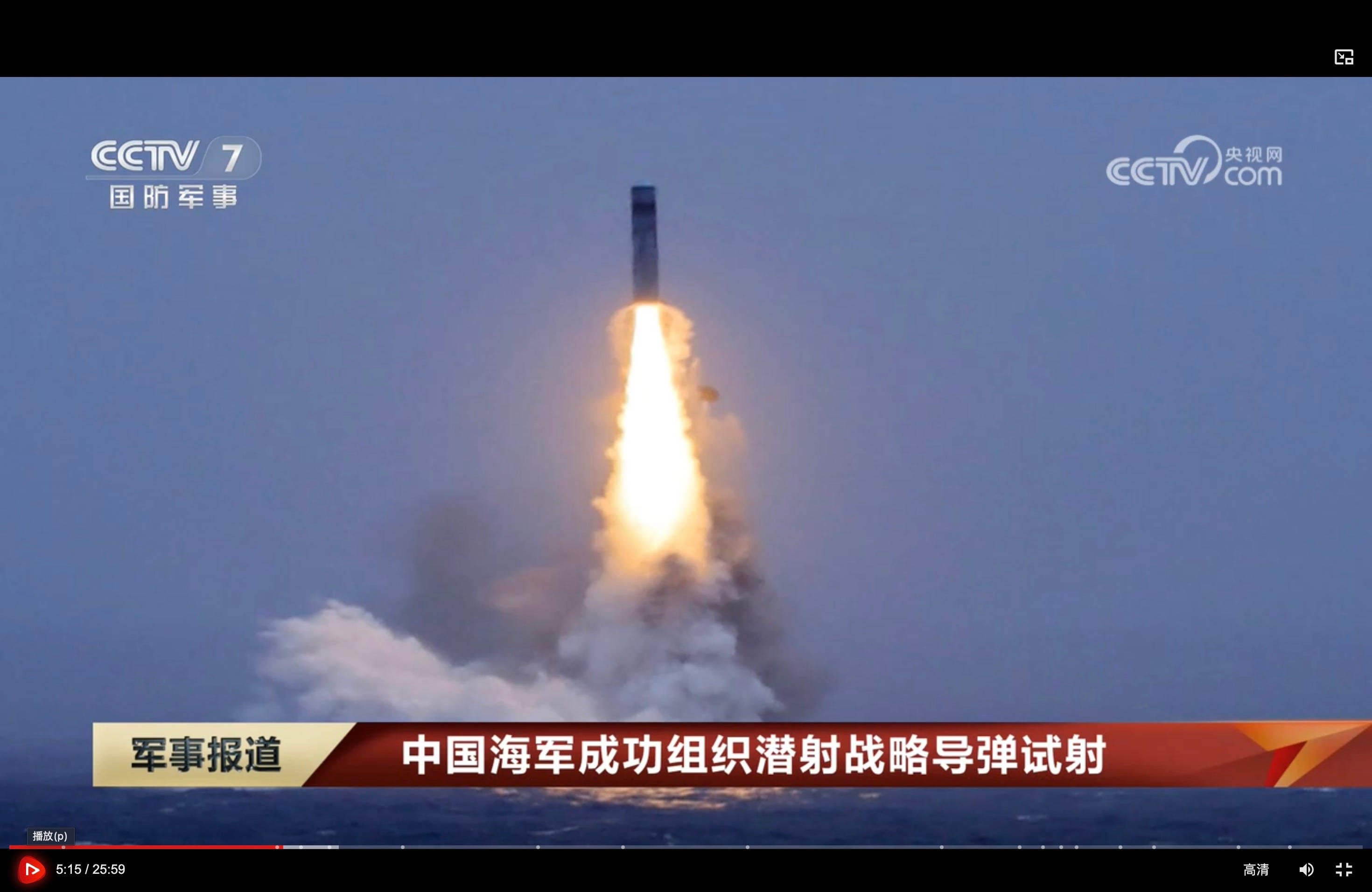
At 12:01 p.m. on Monday, July 6, a Chinese nuclear-powered submarine carried out something Beijing had never publicly acknowledged before: a submarine-launched ballistic missile test into the Pacific. But navigation warning information suggests China may originally have considered two different test profiles for that day: one from the Bohai Sea flying over Japan toward the Pacific, and another from the South China Sea, likely crossing over the Philippines, with the second option appearing to be the one that actually occurred. Xinhua said the missile carried a dummy warhead, landed precisely in designated waters, and was part of the PLA’s annual training plan, while insisting it was not aimed at any specific country or target and that relevant countries had been notified in advance.
The launch also coincided with the opening of Joint Sea 2026 in Qingdao, the annual China-Russia naval exercise held every year since 2012. However, there is no confirmation that Russia was involved in the missile test itself, and Beijing has portrayed the launch as its own military activity. This edition traces what we actually know about the missile, the still-live dispute over whether it was a JL-2 or JL-3, what Chinese state media and allied commentators are saying, what the maps circulating online suggest about the launch and target corridor, how this compares to Beijing’s 2024 DF-31AG shot into the Pacific, and why Japan keeps surfacing as one of the most revealing angles in the story.
The Missile: A Live Dispute, Not a Consensus
The first question anyone watching this story asked was simple: which missile was it? The honest answer is that experts do not agree, and the disagreement matters more than most coverage has let on.
Chinese state-linked commentary moved quickly toward the JL-3. In a Global Times write-up, military commentators Zhang Junshe and Song Zhongping, both frequently quoted PLA-adjacent voices, assessed the missile as “highly likely” to be the JL-3, reading the cues from Xinhua’s official wording and the missile’s debut at Beijing’s September 2025 military parade ten months earlier. Song went further, calling the JL-3 probability “extremely high,” and explained the test’s purpose in specific terms: the missile had already completed high-trajectory and low-trajectory tests, and needed a near-full-range trajectory shot to validate its ballistic performance and combat reliability under realistic conditions. Zhang added the broader strategic framing, describing the JL-3 as China’s self-developed third-generation SLBM and now the backbone of its sea-based deterrent, with a range he put above 10,000 kilometers. Jeffrey Lewis, director of the East Asia Nonproliferation Program at Middlebury, independently told reporters it was “highly probable” the missile tested was the JL-3.

Taiwan’s own intelligence assessment points the other way. Taiwan’s National Security Council identified the missile as a JL-2, launched from a Type 094 Jin-class submarine, based on an estimated flight distance of roughly 6,300 kilometers, well short of the JL-3’s claimed 10,000-plus kilometer range and closer to the JL-2’s established profile. That distance discrepancy is the crux of the dispute: if the missile only flew 6,300 km, calling it a JL-3 test of “near-full-range” performance, as Song Zhongping did, becomes harder to square with the numbers.
Now, Lewis thinks the missile might be JL-2 after all, but we have no way of confirming:
What is not in dispute is Lewis’s broader read on the moment, independent of missile type. In a post on X, he wrote plainly that “nuclear weapons states have missiles and they test them,” a reminder that testing itself is not inherently newsworthy behavior for a nuclear power. But he paired that with a sharper point elsewhere: China’s historic restraint on long-range missile testing, driven by political sensitivity rather than technical limitation, appears to be eroding, and more tests of this kind should be expected.
Also worth reading are the comments by Tong Zhao, a leading authority on China's nuclear program.

The Maps and the Reactions
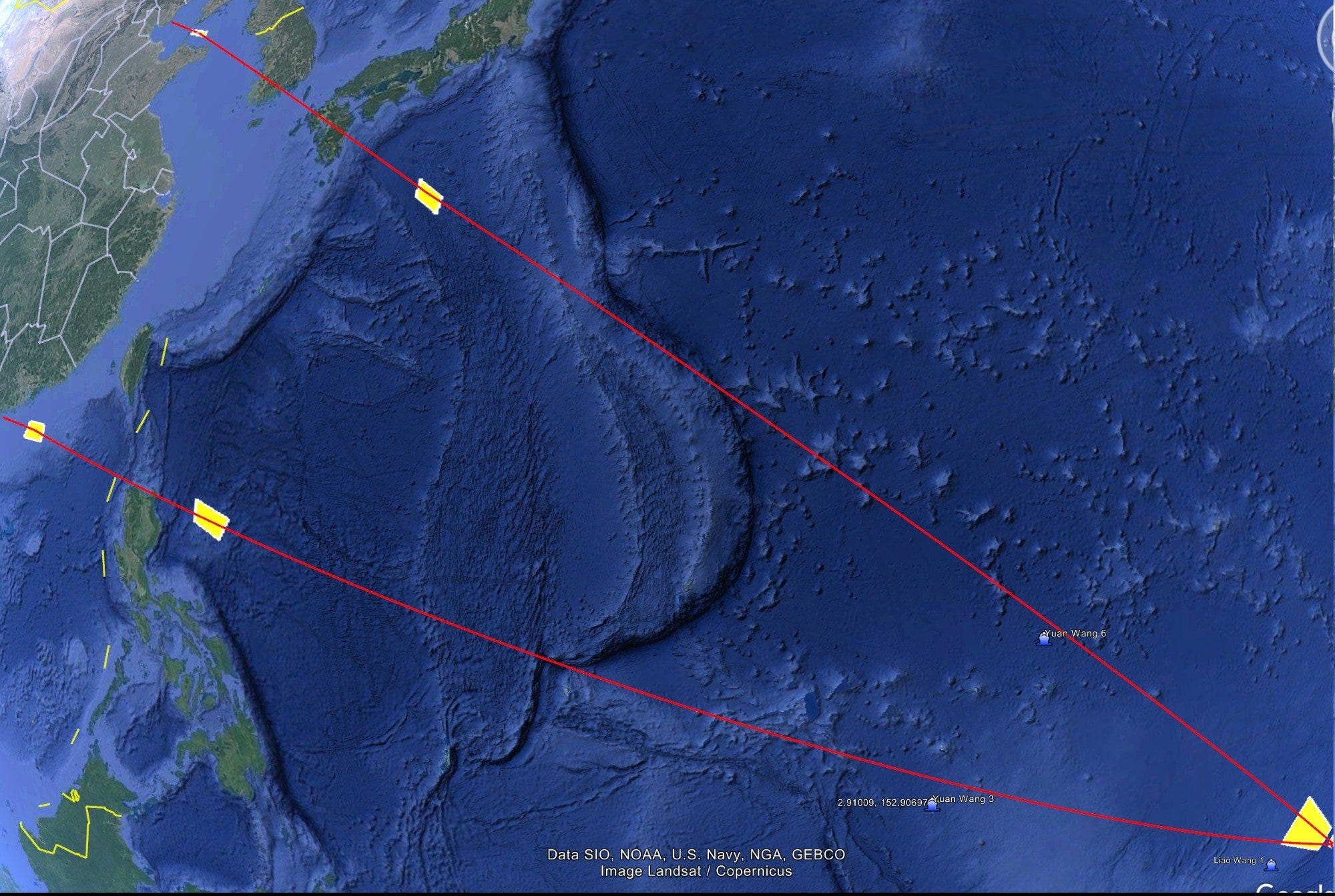
Map source:


What made this test different from a quiet Bohai Bay shot was where the missile reportedly went. Unofficial flight-path maps and Taiwan’s own tracking showed the missile crossing the exclusive economic zones of Palau, Guam, the Northern Mariana Islands, and the Federated States of Micronesia before landing roughly 1,000 kilometers northeast of the Solomon Islands, closest to the EEZs of Tuvalu and Kiribati. CSIS’s Missile Threat project flagged this as China’s first SLBM test ever conducted into international waters, a milestone distinct from the missile type itself.