Hello all,
The Module 3 of the China OSINT course is now live, and we’re already halfway through the journey. If you’ve been thinking about joining, there’s still time to jump in and catch up. The course is designed for professionals to sharpen their skills and there is a rolling availability to enroll.
The Tinderbox in the Kennel
For years, the China-Japan relationship felt like a familiar, if uncomfortable, routine. Bitter arguments over history, tense stand-offs around disputed islands, but steady trade and dense business ties kept the rivalry contained. In Tokyo and Beijing, officials learned to treat flare-ups as passing storms in a long season of managed friction.
That balance began to slip in late 2025, when one sentence in the Japanese Diet landed in Beijing like a thunderclap.
The moment in the Diet
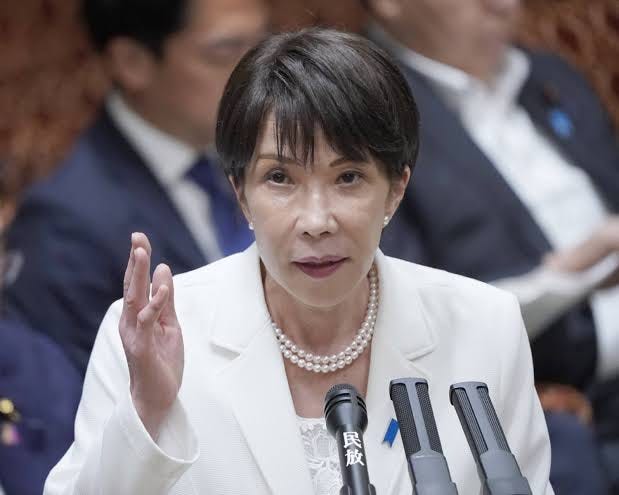
On a November afternoon, Prime Minister Sanae Takaichi answered a question about a hypothetical Chinese attack on Taiwan. A conflict across the Strait, she said, could constitute a “survival-threatening situation” for Japan. That legal phrase opens the door to Japan’s Self-Defense Forces taking part in collective self-defense, including operations alongside U.S. forces.
In Tokyo, it sounded like a hard-line but logical extension of existing security laws, a response to a growing fear that any war over Taiwan would wash up on Japanese shores. In Beijing, it sounded like something far more serious: a direct challenge to the political foundation of the 1972 normalization, and a signal that Japan might fight for Taiwan.
Beijing decides this time is different
Chinese officials demanded that Takaichi retract her remarks, insisting she had crossed a “red line” by tying Japan’s security so explicitly to Taiwan. When no apology came, they began to treat the comment not as a gaffe but as proof that Japan was stepping into a more assertive, militarized role in the region.
Inside Beijing’s system, a narrative took shape. This was “neo-militarism,” backed by the United States, dressed up as legal technicality but aimed squarely at China’s core interest in Taiwan.
A new label for an old neighbor
Diplomacy has its own way of telling stories, through the words states choose to describe each other. In March 2026, Japan circulated a draft of its Diplomatic Bluebook, the annual foreign-policy guide that governments and analysts read closely for nuance.
China, it said, was now “an important neighboring country,” replacing a phrase used for nearly a decade that called the relationship “one of Japan’s most important bilateral relations.” Tokyo kept language about a “mutually beneficial relationship based on common strategic interests,” but the semantic downgrade captured how ties had soured after the Taiwan remarks.
In Beijing’s telling, this was no accident of phrasing. It was another sign that Japan now saw China less as a special partner to protect and more as a difficult neighbor to manage.
Election night in Tokyo
While diplomats argued over adjectives, Japanese voters delivered their own verdict. In February 2026, Takaichi’s Liberal Democratic Party won a sweeping victory, securing a two-thirds supermajority in the lower house. It was, in effect, a domestic mandate for her tougher line on China and defense, including a plan to double military spending to 2 percent of GDP.
In Beijing, that outcome hardened the view that Takaichi’s stance was no mere posturing. A leader associated with historical conservatism and security hawkishness now had the numbers in parliament to reshape Japan’s posture for years.
Missiles on the map
A few weeks later, maps in Chinese planning offices began to look different. In March 2026, Japan deployed its first upgraded Type-12 land-to-ship missiles, dramatically extending their range to roughly 1,000 kilometers, enough to reach parts of mainland China and cover key routes around Taiwan.
Plans to station them on Yonaguni, Japan’s westernmost island, only about 110 kilometers from Taiwan, leapt out from the charts.
From Tokyo’s perspective, these were defensive tools meant to deter any Chinese move in nearby waters and reinforce the U.S.-Japan alliance along the first island chain. From Beijing’s standpoint, they looked like a new, pointed spear aimed at China’s naval access and Taiwan approaches.
A destroyer cuts through history
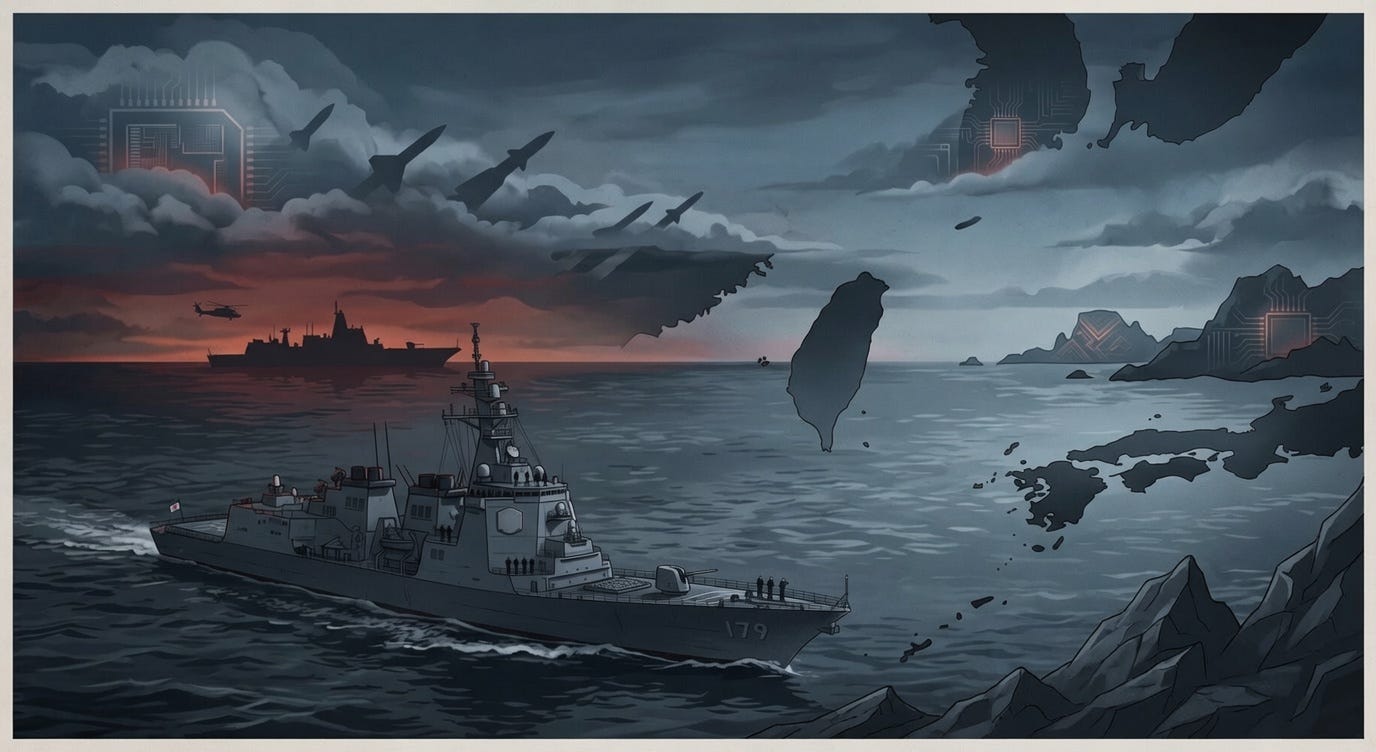
Then came the transit that read like a symbol. On April 17, a Japanese destroyer passed through the Taiwan Strait, a waterway China increasingly treats as something closer to its own to regulate.
The date was not random on Chinese calendars. It marks the anniversary of the treaty in which Qing-era China ceded Taiwan to Japan, a moment still remembered in Beijing as a deep national humiliation.
Whether Tokyo chose that day deliberately or not, the interpretation in Beijing mattered more than the intent. Chinese ministries and the Eastern Theater Command issued sharp denunciations, followed by combat-readiness patrols in the East China Sea and warships maneuvering near Okinawa. Every move Japan made to signal support for freedom of navigation fed into China’s worst-case picture of an assertive military neighbor joining any future fight over Taiwan.
Shrines, memories, and narratives
Shortly after the destroyer transit, Takaichi sent ritual offerings to Yasukuni Shrine, while other officials paid visits. These acts might once have been read mainly as gestures to domestic conservative supporters.
In China and South Korea, however, Yasukuni remains a potent symbol because it honors Japan’s war dead, including convicted Class-A war criminals.
This time, Beijing folded the shrine offerings into its broader narrative of “neo-militarism,” treating them not just as an insult to historical memory, but as another piece of evidence that Japan was tilting away from post-war restraint while rearming and revising its security doctrine.
Changing the rules of the arms game